Please note all the pictures on this site was taken by me and belongs to me. Please do not copy and use without my permission.

For questions, please email me directly at neversink7@hotmail.com.

Happy Bird Place

Happy Bird Place
Click on the picture to go to my website.

Monday, June 10, 2013

Newly weaned young grasskeets

young male scarlet chested parakeet with some extra red front

scarlet chested parakeet hen

split to blue scarlet chested parakeet hen

red bellied scarlet chested parakeet split to blue 

red bellied scarlet chested parakeet hen

cinnamon red bellied scarlet chested parakeet hen and lutino elegnat male

Wednesday, May 22, 2013

Society and Gouldian youngsters coloring up...


red fawn society finch

red fawn society finch

fawn society hen
black headed white breasted yellow backed gouldian hen

orange headed white breasted blue backed gouldian hen

black headed yellow backed gouldian hens - lilac breast on left, white breast on right

orange headed white breasted yellow backed gouldian hen
red headed white breasted green backed male gouldian with red line

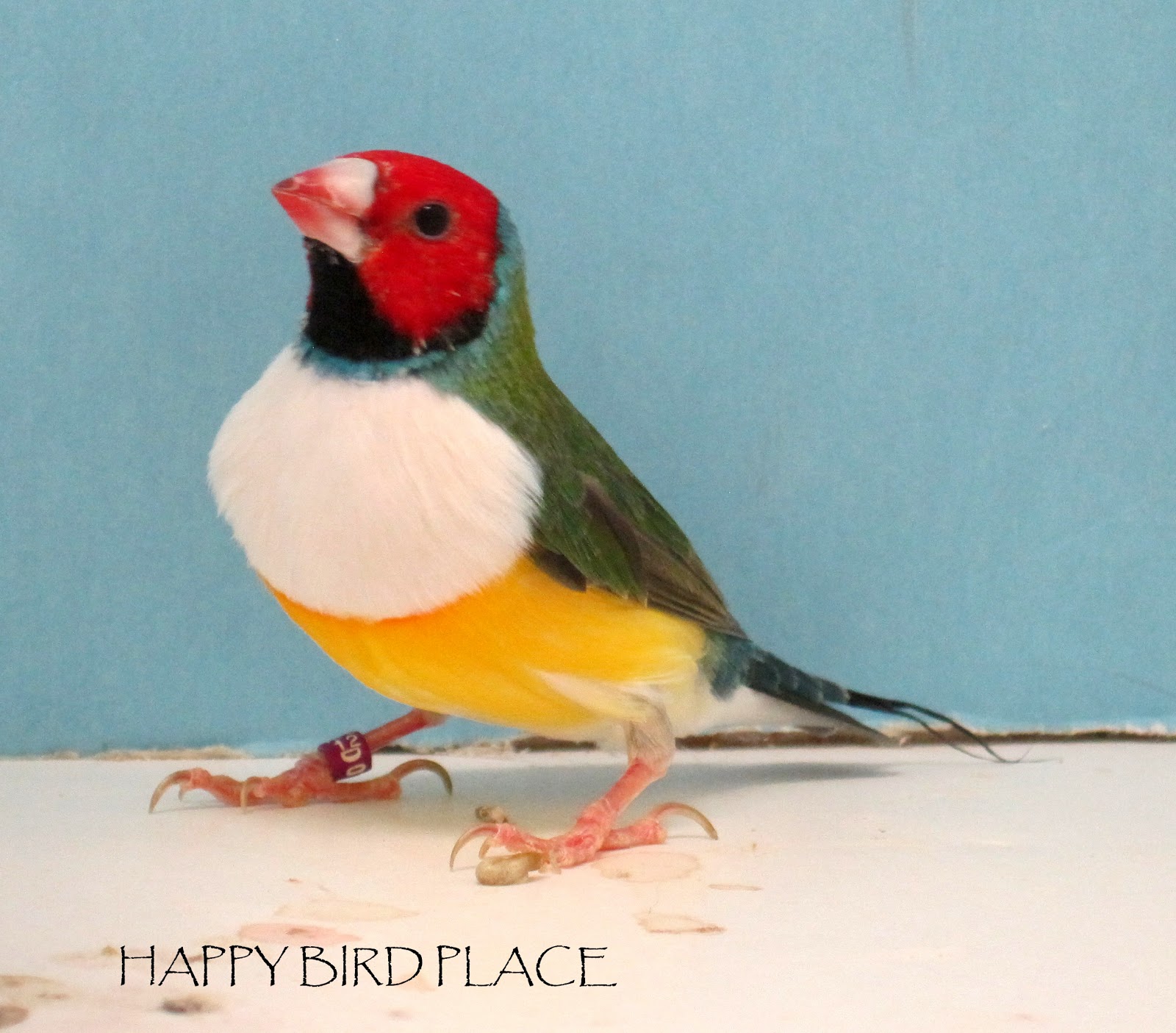
red headed white breasted green backed male gouldian

Wednesday, May 15, 2013

New canaries and society youngsters all grown up.

Phaeo canary hen

Phaeo canary hen

Phaeo canary male

Phaeo canary male

Satinette canary hen

Satinette canary hen

recessive white canary hen

recessive canary hen

dainagon society finch

dainagon society finch

chiyoda society finch

chiyoda society finch

black brown society finch
pied dilute chestnut grey society finch

pied dilute chestnut grey society finch

pied black grey society finch

pied black grey society finch

pied black grey society finch

pied black grey society finch

dilute chestnut grey society finch

clearwing fawn society finch

clearwing fawn society finch

Tuesday, May 7, 2013

New fledgelings...

various gouldians


scarlet chested grasskeet babies - white front blue and cinnamon
 

Wednesday, April 3, 2013

Grasskeet youngsters growing

cinnamon hen
red fronted scarlet chested parakeet babies


normal

normal
red fronted opaline turquoisine baby


red fronted opaline turquoisine babies - one green, one grey green

Wednesday, March 20, 2013

Avian Genetics 101 - the basics

I often come across questions regarding how certain mutations are inherited when discussing breeding of birds.  It occurs to me some basic understanding of avian genetics will help in clarifying these questions.

To understand inheritance and genetics, we have to start with chromosomes.  Chromosomes are essentially packages of DNA.  The mutations we see in the birds are caused by changes in certain genes coded in the DNA.  Animal cells have certain numbers of chromosomes depending on the species.  There are the autosomal chromosome, which are not involved in determining the sex of the animal, and then there are the 2 sex chromosomes.  Most animals have pairs of chromosomes i.e. 2 copies of each chromosome - 1 copy inherited from the father and 1 from the mother.  The sex chromosomes also comes in a pair, but one is bigger and one is smaller.  In humans, most folks know that the female sex has 2 X chromosomes or XX, whereas the male sex has 1 X and 1 Y chromosome or XY.  In birds, instead of the X and Y chromosomes, the sex chromosomes are designated as the Z and W chromosome.  The female bird is the one with the 2 different sex chromosomes, unlike in humans, making them ZW, as opposed to the male bird who is ZZ.
http://scienceblogs.com/grrlscientist/2007/11/29/identifying-sex-in-a-parrot/
Mutations can occur in genes carried on either the autosomal chromosomes or the larger sex chromosome, which in the case of birds is the Z chromosome.  If a mutated gene is carried on an autosomal chromosome, the mutation will be called autosomal, and if it is carried on a sex chromosome, it will be called sex-linked.

The second important concept to understand is dominant and recessive.  The wild type or normal variant of the bird is what usually most commonly exists or what tends to be seen in nature.  Deviations from the norm aka mutations can be recessive to the norm, i.e. if the bird has one copy of the recessive mutation and one copy of its usual normal gene, then it will not show the mutation visibly since the effect of the normal gene will overcome the effects of the mutated gene.  Dominant will the the opposite.  The effect of the dominant mutation will overcome the effect of the usual normal gene, so a bird will need only one copy of the dominant mutated gene to show the mutation visually. 

If a recessive mutation is carried on an autosomal chromosome, then it is autosomal recessive.  If it is carried on the sex chromosome, it is sex-linked recessive.  For dominant mutations, it'll be autosomal dominant or sex-linked dominant.  Some mutations will have different versions that are located on the same gene location and can not completely overcome the effect of each other - these are designated as co-dominant or incomplete dominant.  Usually if a bird carries both mutations that are co-dominant to each other, the effect of the mutations will be additive.

Autosomal dominant mutations means a bird will only need 1 copy of the mutation to show the effect of the mutation.  If both copies are the autosomal dominant mutation, depending on the mutation, sometimes there is no additional visually apparent difference, or the effect of the mutation may be additive depending on how many copies there are.  An example of an autosomal dominant mutationn is the frill mutation in society finches.  Only one copy of the mutation is needed to give the society a crest on its head or frill on its neck or chest.
normal chocholate society finch

chocolate society finch with a chest frill (aka chiyoda)


Autosomal recessive mutation means a bird will need 2 copies of the mutated gene for the mutation to show up visually.  If a bird only has one copy of the mutated gene, it will be designated to be SPLIT to the mutation.  An example can be see in the blue mutation of the scarlet chested parakeets.  A scarlet will need 2 copies of the blue mutation to be blue.
normal male scarlet chested parakeet

blue male scarlet chested parakeet


Sex linked dominant mutations in birds are located on the Z chromosome, and a bird will need only 1 copy for the mutation to be visual.  An example is PENDING.


Sex linked recessive mutations are also located on the Z chromosome.  Because female birds only has 1 copy of the Z chromosome (the other one is W and doesn't carry much genetic information), female birds only needs one copy of the mutated gene to show the mutation visually since there is no normal copy of the gene on the W chromosome to overcome the effect of the recessive mutation.  In males, since they have 2 copies of the Z chromosome (ZZ), they will need 2 copies of the mutated gene to show the mutation visually.  If the male only has one copy of a sex-linked recessive mutation, he is split to the mutation.  A female bird can never be split to a sex-linked recessive mutation.  A good example is the ino mutation in e.g. shaft tail finches.
normal male shaft tails on the left and creaminos on the right